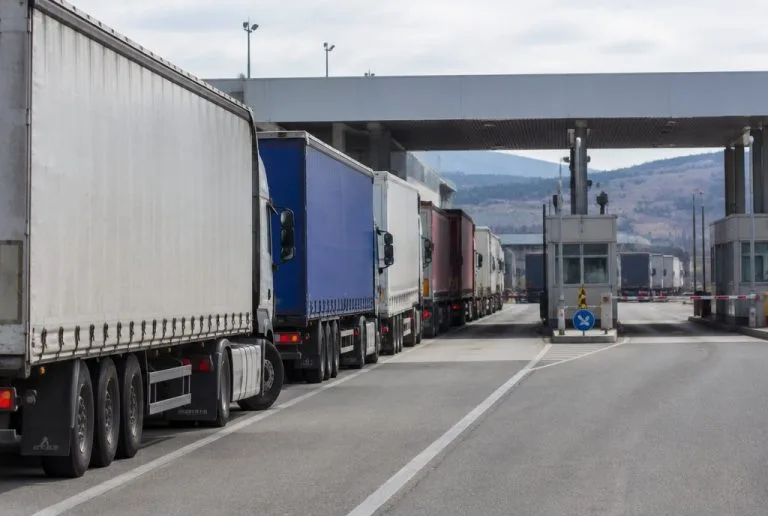
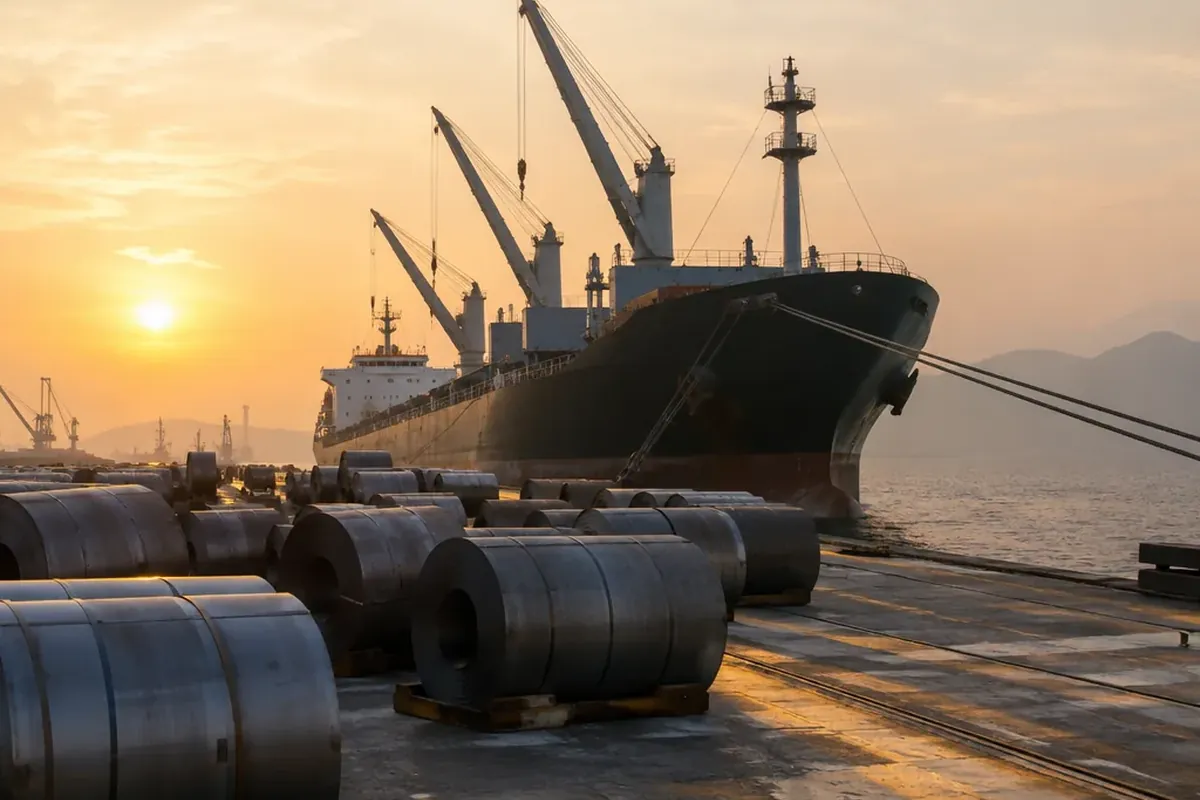
Well-known examples of protectionism include tariffs such as the Smoot-Hawley Tariff Act of 1930 and the 2018 U.S. steel and aluminum tariffs, import quotas and tariff-rate quotas, subsidies such as the European Union’s Common Agricultural Policy, and voluntary export restraints such as the 1984 limits on car shipments to the United States. All of them shield domestic producers from foreign competition, and all of them change prices, supply chains, and costs for consumers.
What Is Economic Protectionism and Why Do Governments Use It?
Economic protectionism is an economic policy designed to restrict imports through tariffs, quotas, subsidies, and other regulations to shield domestic industries from foreign competition. Historically rooted in 17th- and 18th-century European mercantilism, modern trade protectionism operates within an international framework established by the World Trade Organization (WTO).
Governments typically justify protective interventions using four primary arguments:
- Preserving Domestic Employment and Capacity: Proponents argue that protective measures preserve domestic employment and critical industrial capacity, particularly in sectors vital to national security.
- Protecting Infant Industries: Emerging sectors in developing economies receive temporary protection to give them time to grow and become competitive before facing established foreign rivals.
- Countering Unfair Trade Practices: Measures such as antidumping duties and countervailing duties target foreign goods sold below fair market value or products subsidized by foreign governments.
- National Security Grounds: Provisions like Section 232 of the U.S. Trade Expansion Act of 1962 allow the president to restrict imports that threaten to impair national security.
Five Primary Trade Restrictions in Practice
Governments employ various measures to regulate international commerce. While import tariffs remain the most prominent instrument, quantitative and administrative tools also restrict market access.
| Trade Restriction | Mechanism | Market Impact | Real-World Example |
|---|---|---|---|
| Tariffs | Customs duties charged as a percentage of value (ad valorem), a fixed fee per unit (specific tariff), or a combination of both. | Raises the price of imported goods relative to domestic alternatives. | A 5% ad valorem tariff on Chinese flat-screen televisions; 7.85 cents per liter specific duty on imported orange juice. |
| Import Quotas | Absolute numerical limits on the quantity of a product that can be imported over a given period. | Restricts overall market supply, driving up domestic prices. | Tariff-rate quotas (TRQs) are a softer variant: a set volume enters at a low duty, and imports above the cap pay a higher rate. |
| Subsidies | Government payments or tax credits granted directly to domestic producers. | Creates a price advantage for domestic producers over foreign competitors. | The European Union’s Common Agricultural Policy (CAP), allocating €386.6 billion across 2021–2027. |
| Nontariff Barriers | Rules-of-origin regulations, safety standards, import licensing, and administrative procedures. | Increases compliance costs and administrative hurdles, making importing more difficult. | Safety standards, inspections, and import licensing procedures. |
| Voluntary Export Restraints (VERs) | Arrangements where an exporting nation agrees to limit shipments to avoid mandatory foreign import restrictions. | Restricts import volumes and generates deadweight economic loss; formally prohibited under WTO agreements. | The 1984 voluntary export restrictions limiting automotive shipments to the United States. |
Protectionism Examples: Tariffs in Modern and Historical Trade Policy
Historical and recent cases show how duties change trade flows and how trading partners respond with retaliation.
The Smoot-Hawley Tariff Act of 1930
Signed into law by President Herbert Hoover on June 17, 1930, after passing the Senate by a 44–42 vote, the Smoot-Hawley Tariff Act raised U.S. import duties on agricultural and industrial products by approximately 20%. More than 1,000 economists had petitioned Hoover to veto the legislation, warning of retaliatory tariffs and economic harm. Within two years, roughly two dozen trading partners implemented retaliatory “beggar-thy-neighbour” duties.
Between 1929 and 1934, global trade volume fell by roughly 65%. Total U.S. exports dropped from nearly $7 billion in 1929 to $2.4 billion in 1932, while the effective ad valorem equivalent tariff rate climbed from 44.4% in 1930 to 59.1% in 1932—the second-highest level in American history. A 2026 study by Mitchener and Pedemonte found that Smoot-Hawley accounted for about 27% of the decline in U.S. imports through 1931, creating welfare losses equal to 0.2% of gross domestic product. The act ultimately prompted the Reciprocal Trade Agreements Act of 1934, which shifted tariff-setting authority from Congress to the President.
Section 232 Steel and Aluminum Tariffs (2018)
On March 8, 2018, President Trump ordered national security tariffs of 25% on steel imports and 10% on aluminum imports under Section 232 of the Trade Expansion Act of 1962. The measures spanned categories from unwrought aluminum (HS 7601) to castings and forgings. Through 2019, U.S. steel imports contracted by 24.0% in volume (8.3 million metric tons) and 17.7% in value ($5.1 billion) compared to 2017 levels, while aluminum imports fell 12.5% by volume (0.9 million metric tons).
The invocation of the Article XXI national security exception under GATT sparked disputes with nine WTO members and prompted countermeasures. Canada imposed 25% tariffs on steel and 10% on aluminum, agricultural, and wood products across 231 tariff subheadings. The European Union instituted 25% retaliatory duties targeting 154 U.S. product subheadings, effective June 20, 2018.
The US-China Trade Escalation (2018–2019)
A broad bilateral tariff confrontation commenced on March 23, 2018, when the United States imposed 25% steel and 10% aluminum tariffs covering $2.8 billion of Chinese products. China retaliated on April 2, 2018, applying tariffs of up to 25% against 128 American products valued at $2.4 billion, including pork, soybeans, scrap aluminum, and airplanes. As a result, China’s duty on U.S. frozen pork rose from 12% to 37%, placing American producers at a competitive disadvantage against European and Canadian suppliers.
Under Section 301 of the Trade Act of 1974, the United States subsequently enacted three successive rounds of 25% tariffs: List 1 covering 818 items ($34 billion), List 2 covering 279 items ($16 billion), and List 3 encompassing 5,733 products ($200 billion). By 2023, the trade-weighted average U.S. tariff on Chinese exports reached 21.1%, while China’s average levy on U.S. goods stood at 19.3%. China’s share of total U.S. imports fell from 22% at year-end 2017 to about 12% by late 2024 and to roughly 7% by December 2025.
Agricultural Subsidies: The European Union’s Common Agricultural Policy
Protectionism functions not only through border taxes but also through internal financial assistance. Established in 1962, the European Union’s Common Agricultural Policy (CAP) stands as the bloc’s longest-standing policy. For the 2021–2027 framework, the CAP commands €386.6 billion, representing an expenditure of roughly €0.34 per EU citizen each day.
While the CAP consumed 73.2% of the total European Community budget in 1980, spending decreased to 24.6% of overall EU expenditure by 2023. Funding across member states in 2023 was led by:
- France: €9.5 billion
- Spain: €7.1 billion
- Germany: €6.4 billion
- Italy: €6.1 billion
- Poland: €5.1 billion
In total, €38.16 billion supported direct payments to farmers in 2023, €12.95 billion went toward rural development, and €2.67 billion funded market measures. Under the 2023–2027 planned allocation of roughly €307 billion in public expenditure, nearly two-thirds is allocated to direct payments and sectoral interventions (Pillar 1), with the remainder dedicated to rural development (Pillar 2).
Who Really Pays Tariffs? Pass-Through Rates and Economic Incidence
Legally, the domestic importer pays the duty to customs. Who carries the cost in the end depends on how much of the tariff is passed on in prices, and recent studies of U.S. tariffs find that most of it stays at home.
A 2026 Kiel Institute study examining shipment-level data across 25 million import transactions valued at nearly $4 trillion found that U.S. importers and consumers bore approximately 96% of tariff costs, while foreign exporters absorbed only about 4%. A Federal Reserve Bank of New York study published in February 2026 similarly found that 94% of tariff incidence was borne by domestic importers during the initial eight months of 2025. Analysis by Gopinath and Neiman (2026) estimated pass-through rates of 81% during 2018–2019 and 92% in 2025, meaning that import prices rose nearly one-for-one with tariff increases. The share is not the same everywhere: a CEPR study found that the median share paid by U.S. importers was 53%, ranging from 0% to 100% depending on the product and the country.
These measures contributed to an increase of approximately $200 billion in U.S. customs revenue in 2025, a burden carried mostly by American businesses and households. Downstream price impacts also persist over time: an investigation into European wine tariffs found that French and Spanish wines subject to U.S. duties saw average retail price increases of 5.9%, taking nearly a full year to adjust and persisting even after the tariffs expired.
Common Myths and Misconceptions About Trade Protectionism
Several common claims about trade protection do not match the research.
- Myth 1: Foreign exporters pay import tariffs. The domestic importer pays the duty to customs. Foreign exporters carry part of the cost only if they cut their prices, and in the U.S. studies cited above that share was small.
- Myth 2: Protectionism boosts aggregate purchasing power. An empirical study by Furceri et al. (2019) concluded that tariff increases lead to significant adverse outcomes for domestic output and productivity. Additionally, a 2025 study showed that tariff increases raised consumer prices, eroding wage increases and creating a net negative effect on purchasing power. Because low-income households allocate a larger share of income to traded goods, tariffs operate as a regressive policy.
- Myth 3: Trade restrictions protect domestic industry without collateral costs. Protectionism functions as an indirect subsidy from consumers to domestic producers and creates deadweight loss. A Brookings Institution study found that voluntary export restraints on autos in 1984 cost U.S. consumers about $14 billion while domestic auto manufacturers gained $9 billion in profits, resulting in an outright deadweight loss of $5 billion. Some economists estimate that the benefits of free trade outweigh the losses by as much as 100 to 1.
- Myth 4: High tariffs have been a lasting feature of U.S. policy. In U.S. history, high protective tariffs existed primarily during four brief periods: 1828–1832, 1842–1846, 1890–1894, and 1930–1934. Each era ended with the president’s party losing the subsequent election. William McKinley, who as a congressman championed the McKinley Tariff of 1890 that lifted rates to nearly 50%, later reversed his stance entirely. On September 5, 1901, the day before he was shot, he advocated for reducing tariffs and adopting free trade, declaring that “the period of exclusiveness is past” and that “commercial wars are unprofitable.”
Frequently Asked Questions
What is economic protectionism?
Economic protectionism is an economic policy that restricts imports through tariffs, quotas, subsidies, and other regulations to shield domestic industries from foreign competition. Supporters point to jobs, young industries, and national security; critics point to higher consumer prices, deadweight loss (economic waste that benefits no one), and retaliation from trading partners.
What are 5 trade restrictions?
The five primary trade restrictions are tariffs (taxes on imported goods), import quotas (numerical quantity caps), subsidies (government payments or tax credits to local producers), nontariff barriers (regulations, safety standards, and licensing hurdles), and voluntary export restraints (arrangements where exporting countries agree to self-limit exports).
What is another name for protectionism?
In modern economics, protectionism is commonly referred to as “trade protectionism.” Historically, European policies during the 17th and 18th centuries were known as “mercantilism.” In satirical literature, Ambrose Bierce described it in his 1911 book The Devil’s Dictionary as “a scale of taxes on imports, designed to protect the domestic producer against the greed of his consumer.”
Can you give me a real-life example of a tariff?
Real-life examples include the 5% ad valorem tariff applied in 2018 to large flat-screen televisions imported to the U.S. from China, as well as the specific tariff of 7.85 cents per liter levied on imported orange juice. During the US-China trade dispute, China raised its duty on U.S. frozen pork from 12% to 37%.
Which U.S. president had the highest tariffs?
The highest U.S. tariffs occurred across multiple administrations rather than under a single president: President Benjamin Harrison signed the McKinley Tariff in October 1890, raising average rates on manufactured goods to nearly 50%, and President Herbert Hoover signed the Smoot-Hawley Tariff Act of 1930, which drove the effective rate to 59.1% by 1932.
Who really pays tariffs?
The domestic importer pays the duty to customs and usually passes much of it on to customers. Studies of recent U.S. tariffs put the share carried by U.S. importers and consumers at 81% to 96%, while a CEPR study found a median of 53% with wide variation by product.